Friday, January 31, 2014

January Post:

Over the past recent years, the top 4 mobile companies, Verizon, T-mobile, At&t, and Sprint, have been planning on installing cellular networks throughout the whole US and trying to improve their networks by installing more Radio Base Stations around every city. Even though their is alot of improvement throughout the networks, their are still alot of regions and neighborhoods that receive little to no cellular data at all, such as Chino, Chino Hills, and much more. If their is barely any cellular data around your house, it makes it really tough to make a phone call, send a text or just browse the internet on your phone.
So after doing some research on improving your cellular network around your home, I have come across this device called the "DT 4G" which could solve your problem. Basically this device will boost your signal, by amplifying 4G, and 3G from the outside of your house. It will improve your signal strength and data rates at the same time, and it works with all US Carriers. As of right now its not for sale, but its going to come out soon. They displayed this product at CES 2013, and it will come out this year for around $300.

The DT 4G

Displays areas of where to place the DT 4G for better coverage around your home.

Blog 13: Lesson 2 Reflection

1. Positive Statement

What are you most proud of in your Lesson 2 Presentation and why?

I am most proud of the way I presented my information to my classmates. I new my information really well and I tried to make it really simple for anyone to understand.

2. Questions to Consider
       a.     What assessment would you give yourself on your Lesson 2 Presentation (self-assessment)?

I would give myself a P+, because I feel like I knew my information about the presentation real well, the activity I created the activity effectively and I met time. Plus looking at the contract, I did a little extra by creating two EQ Posters and having everything prepared beforehand.

3. What worked for you in your Lesson 2?

What really went well was that their wasn't any technical issues with the powerpoint and I also had all my information that I had to talk about memorized.

4.  (What didn't work) If you had a time machine, what would you have done differently to improve your Lesson 2?

I would have added more questions to the worksheet I handed out to the class with atleast 5 or more questions, because I feel like everyone finished the activity in a short amount of time.

5. Finding Value
What do you think your answer #2 is going to be?  

My answer 2 could be:

A hardware Issue.

Wednesday, January 15, 2014

Blog 12: Third Interview Questions (Updated)

10 Open Interview Questions

1. How can an RF Field Engineer best troubleshoot cellular coverage in a city?

2. Can you explain the various issues within an RBS?

3. If you cannot resolve a problem within the RBS what do you do in response?

4. What are your responsibilities when working as an RF Field Engineer?

5. If there is a hardware issue within an RBS, how do you find the damaged equipment? And what do you do to that equipment?

6. If there is a software issue within an RBS, what do you do?

7. In a cellular system, can you explain the meaning of a cell?

8. What happens around the area of an RBS that does not work?

9. Can you remotely troubleshoot an issue within an RBS?

10. Can you give examples of the Switch issues?

Thursday, January 9, 2014

Blog 11: Mentorship 10 hours check

1. Where are you doing your mentorship?
I can't really specify a location as to where I do my mentorship because with my mentor we are in the field meaning we travel between cities.

2. Who is your contact?

Oscar Holzmeister, whom is an RF Field Engineer for T-Mobile.


3. I have done 33.5 Hours

4. For the past couple of months, I have been helping my mentor troubleshoot various Radio Base Stations. I have replaced radios, replaced cables, reset Radio Based Stations, and assisting my mentor in anything he needed help on. You can see a variety of Radio Based Stations I have been in the past with my mentor, in my December monthly post.

Monday, January 6, 2014

Blog 10: Senior Project, The Holiday

1. It is important to consistently work on your senior project, whether it is break or we are in school. What did you do over the break with your senior project?

Over the break, I completed 10 hours of mentorship for my senior project. With my mentor, we traveled to 3 Radio Based Stations to troubleshoot each one. The first RBS that we visited was located in the city of Compton. When we arrived to the area we immediately spotted the problem, because the power meter (Gives power to the Radio Based Station) had been run over by a truck.
First RBS
The second RBS we traveled to was in the City of Industry, and the problem with this site was that their was a power outage in the whole region. All of the lights were off, their was no electricity and we had to provide a power generator for the station until Edison brought the power back up.
Second RBS

Second RBS

The final RBS that I went to was located on top of a rooftop. The site had a simple issue which was that, the station had a bad setting. It took a really long time to discover out the problem as it was so small and we thought the solution was something else but we figured it out in the end.

Third RBS

2. What was the most important thing you learned from what you did and why? What was the source of what you learned?

The most important thing that I have learned from my mentorship experience over the break, was how to replace a radio for an RBS. This was very important because most of the times if their is an issue with an RBS it mostly comes through the radios that provide cellular networks to the public. So in order to fix the issue we need to replace the damaged one with a brand new one. It took a lot of responsibility because the radios cost around thousands of dollars and damaging another one would cause alot more problems. I learned to replace a damaged radio, through the help of my mentor when we arrived to the second RBS located on a rooftop.

3. If you were going to do a 10 question interview on questions related to answers of your EQ, who would you talk to and why?

I would talk to my mentor's colleague because he has been an RF Field Engineer since my father has been and he can answer my questions in a whole new perspective from my mentor's interview.

Monday, December 30, 2013

Where are Radio Based Stations located?

The life of an RF Field Engineer is very interesting, as you not only have the opportunity of travelling throughout the city but you will also encounter interesting obstacles and issues to troubleshoot. I have been doing mentorship as an RF Field Engineer for T-Mobile since the summer and what an RF Field Engineer does, is if there is an issue with the cellular network in an area they must troubleshoot the problem. Usually the problem comes from the Radio Based Stations (RBS), which transmits and receives cellular data such as 2G, 3G, 4G, and LTE. And these RBSs' are scattered throughout the city, most of which are hidden.

Here are some of the areas that me and my mentor found the Radio Based Stations to be located:

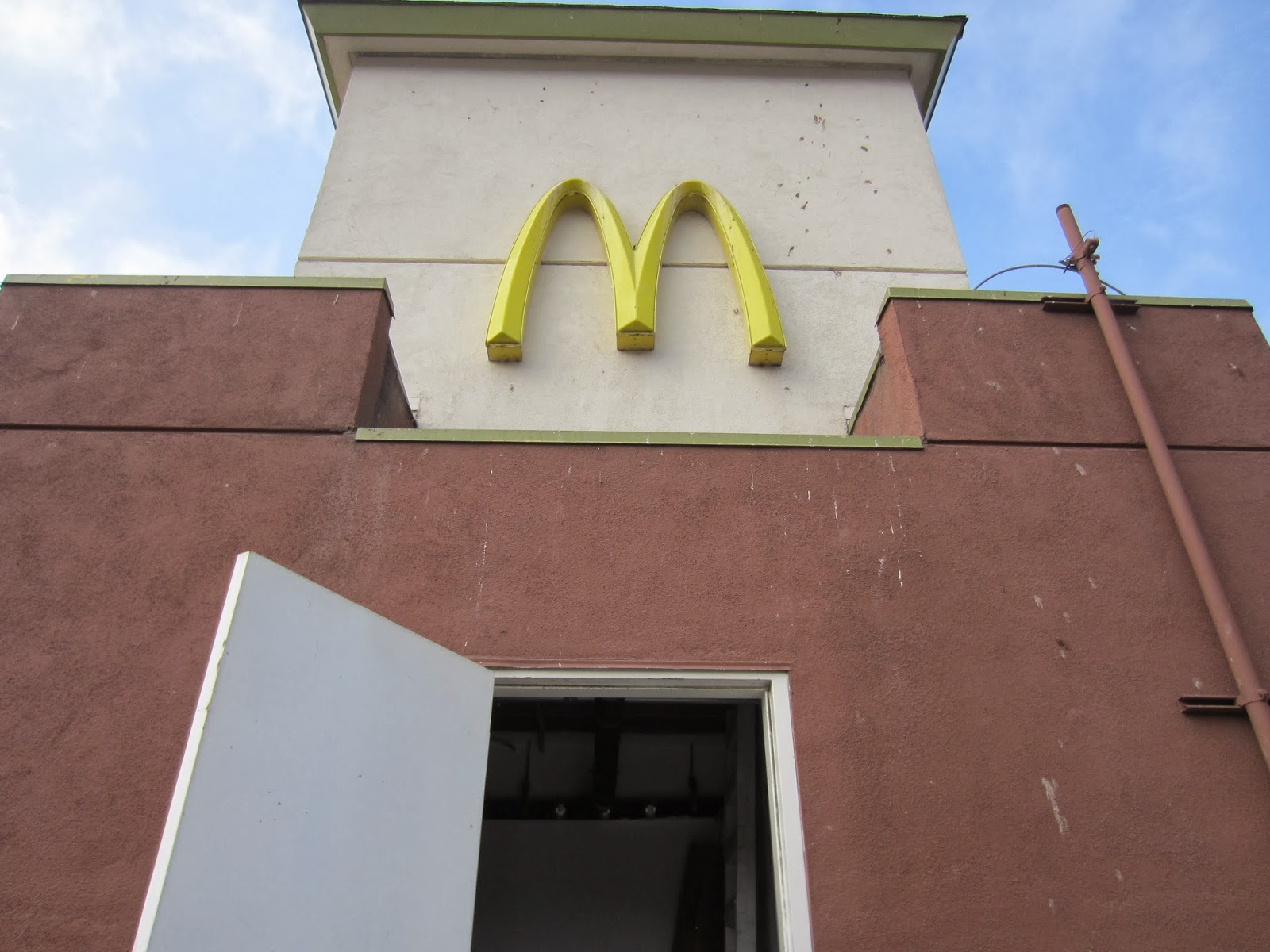
This RBS was located on top of a McDonald's rooftop.


__________________________________________________________________

This RBS was located right behind the LA County Fair back in September. 


_______________________________________________________________


This RBS was located at a giant Garden in Pomona. 


_______________________________________________________________

This RBS was located inside a Catholic Church, and the antennae was cupola. 


_______________________________________________________________
This RBS was located in a dark alley in Pomona.


_______________________________________________________________

Someone ran over this power meter for the RBS in Compton.

There were hot wires on the floor from the power meter with 200 Volts of electricity.

_______________________________________________________________
Those are some of the areas of which I have been to fix issues with the Radio Based Stations. As you can tell some of these areas don't seem safe at all, but the Radio Based Stations can be located anywhere, even places you wouldn't expect.


Saturday, November 30, 2013

4G Explained

So what is 4G anyway, I mean we have seen it on carrier branding or commercials but there's no widely excepted definition of 4G or LTE. So let's try to explain that.

So as far as the name goes "4G" the "G" stands for a generation of mobile technology. With each new generation you get a significantly faster data speed but it becomes incompatible with the previous generation. In other words, you will never see a 3G phone working on a 4G network, but their are carriers that have both 3G and 4G networks (Verizon).

1G was the first Analog system and has the slowest data speed possible but at the point it was the only network available.

2G moves to digital but it's still very slow, somewhere around 10-200 kbps. Fun Fact: The first iPhone was 2G.

3G is a much faster digital and goes up to 384 kbps.

4G systems like LTE claim to initially start out at 5 Mbps, which is the highest network at the point. But 4G isn't just faster than all the other previous generations, it also has much more capacity, and their is alot less bandwidth caps

The complications that has people wondering what really is 4G is the fact that their are some really modern 3G networks that are actually faster than the beginnings of the 4G networks. For example, HSPA+  which is modernized 3G but the speed of this network can go up to 7 Mbps, because it's been evolved for so long. T-Mobile runs an HSPA+ network, and they plan to evolve it up to 30 Mbps.

The video showed you a comparison of 4G and 3G on 3 separate iPhones. Now you can actually see how fast 4G truly is when compared to other generation networks.